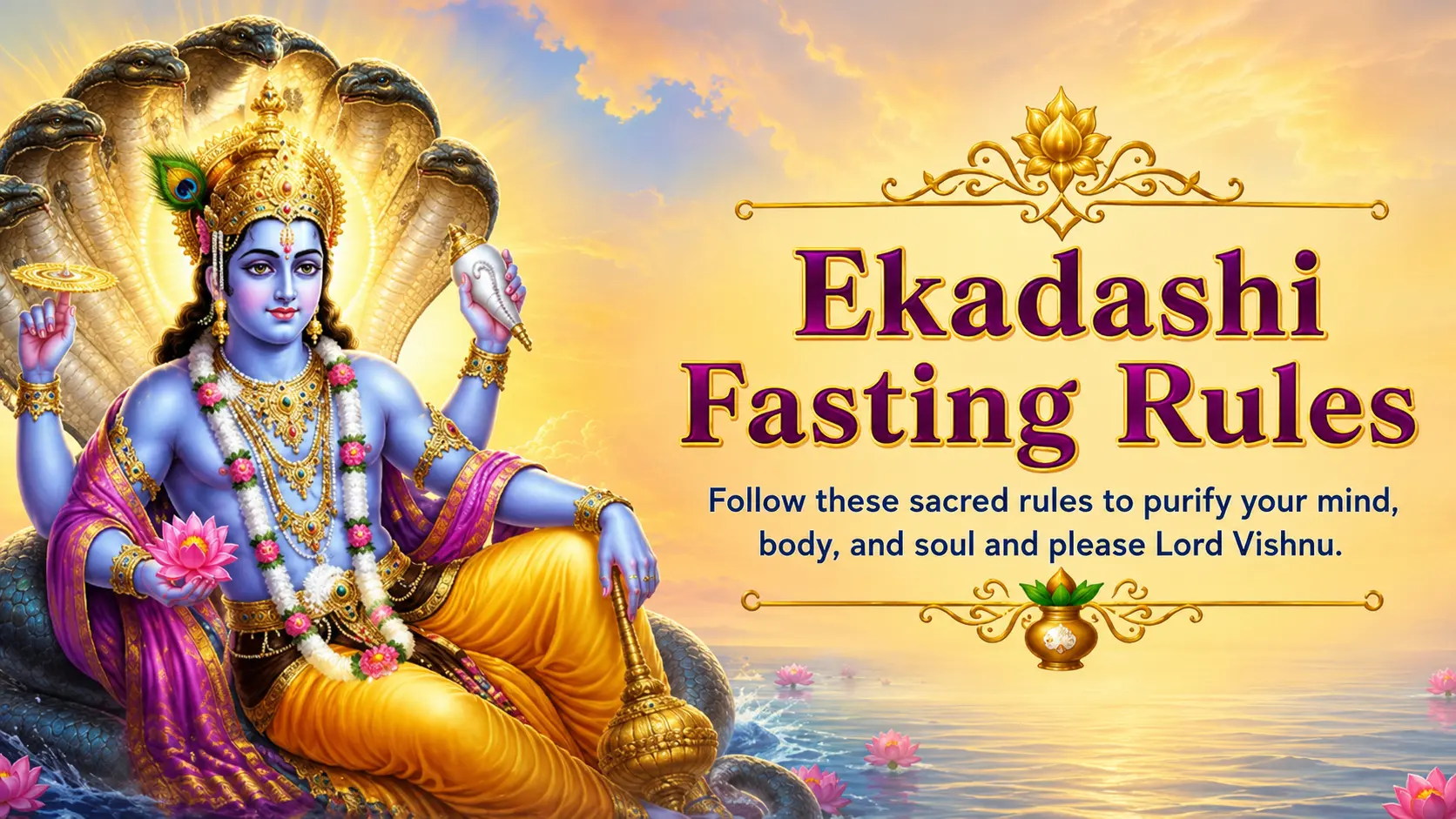
Ekadashi is a sacred observance in Hinduism dedicated wholly to Lord Vishnu, the Supreme Personality of Godhead. Moreover, this auspicious day occurs twice each month and allows devotees to purify their body, mind, and soul.
However, this fast can be observed by anyone, and it is especially popular among devotees of Lord Vishnu, who observe it on the 11th lunar day of each Hindu calendar month. The Ekadashi fasting rules consist of abstaining from grains and legumes and are often observed as a full, waterless, Nirjala, or fruit-based, Phalahar, fast to attain spiritual growth and good health.
Next, we will cover in detail every factor a devotee should consider when observing Ekadashi Vrat, acknowledging its significance and the guidelines for following the tradition effectively.
What Are Ekadashi Fasting Rules?
Ekadashi fasting involves a strict avoidance of all grains, beans, pulses, and non-vegetarian foods to honor Lord Vishnu with a pure heart and sound mental health. Moreover, these rules allow one to eat only once during the vrat, such as fruits or milk.
However, some people also follow the Nirjala type, completely observing the fast without water and food for the whole day. The fast starts with sunrise and continues until the next morning during specific Parana hours.
Likewise, the Ekadashi fasting procedure is not merely about physical fasting; it is a spiritual journey that aims to offer liberation and helps connect you with the divine.
Lastly, this fast is mainly believed to clean the body and soul, offering a closer connection with Lord Vishnu.
Types of Ekadashi Fasts
Ekadashi vrats, dedicated to Lord Vishnu, the Supreme Godhead, are mainly practiced in three main types, i.e., Nirjala, waterless; Saphla, fruit-based; and Phalahar, non-grain one-time eating, varying by intensity.
Moreover, Nirjala Ekadashi is the strictest, allowing no food or water intake, while other forms allow one meal or fruit eating. Additionally, these Ekadashi fast rules are very typical but also give individuals spiritual growth and an enhanced personality with physical detoxification over time.
1. Nirjala Ekadashi Fast
The hardest and strictest Ekadashi fast, which includes the complete elimination of food and water intake for 24 hours. This Ekadashi mainly falls in the Jyeshtha month, but can be observed in any month according to one’s personal strength and spiritual belief.
Moreover, the origin of this Ekadashi is tied to Lord Bhima, one of the Pandava brothers. He was unable to observe all the 24 Ekadashis falling in a year, so Sage Vyasa advised him to observe Nirjala Ekadashi to gain the liberation and virtue of all the others combined.
2. Saphla Ekadashi Fast
Saphla Ekadashi fast is dedicated to Lord Vishnu, observed on the 11th day of the waning Moon in Krishna Paksha between the months of December and January. Moreover, it is also referred to as Pausha-Krishna Ekadashi. The story behind this Ekadashi is of a prince named Lumpaka, who was sinful and living in the forest because his father expelled him from the kingdom.
He unknowingly observed this fast while shivering from cold and hunger, yet received divine blessings because he believed in Lord Vishnu. Saphla Ekadashi fasting procedure includes fasting and worshiping Lord Vishnu with fruits, incense, and lamps to achieve spiritual merit, liberation, moksha, and prosperity.
3. Phalahar/Falahari Ekadashi Fast
Phalahar Ekadashi is not a specific Ekadashi but rather a type of fast observed on several Ekadashi days, in which devotees consume only nuts, fruits, and specific non-grain items to sustain themselves while fasting. However, this Ekadashi is connected with a broader storyline of Ekadashi Devi, a divine power that emerged from Lord Vishnu to destroy the demon Mura.
Moreover, the Phalahari Ekadashi is observed to purify the mind, body, and soul through fruit-eating, reflecting a partial fast in which only fruits and certain non-grain foods are consumed, with prayers offered to Lord Vishnu.
How to Observe the Ekadashi Fast
Let’s explore the simplest procedure one needs to follow for Ekadashi fasting that is a must, and every beginner should follow:
- 01
Step 1: Make a Sankalp (Vow)
Start by taking a vow in the morning on Ekadashi day, after bathing. Sit in front of the idol or picture of Lord Vishnu, holding water and some flowers in your right palm, and declare your intent. After taking the vow, offer the water to the ground in front of the deity.
- 02
Step 2: Avoid Eating Grains and Pulses
For Ekadashi, it is very important to abstain from certain grains, such as pulses, rice, and wheat. These foods can hinder your fasting goals and can disrupt your spiritual journey. Instead of this, eat fruits, sabudana, or anything made from singhade ke atta.
- 03
Step 3: Timing is Key
Ekadashi fasting begins in the morning and ends on the following day at the prescribed time. You will need to use a reliable Hindu calendar to track exact timings and maintain your fasting routine in line with all traditional rules. Dwadashi Parana refers to breaking the fast at the proper time on the next day. Break the fast with fruits or light food like potato curry.
Ekadashi Vrat Rules to Follow
Ekadashi Vrat requires strict adherence to not eating any type of grains, pulses, and beans, while prioritizing a sattvic diet or a water-only fast to worship Lord Vishnu. Moreover, there are certain key rules, including waking up before dawn, avoiding onions and garlic, controlling anger, and breaking the fast on the next day, Dwadashi.
1. Take a bath without soap or any body wash.
2. Do not use any toothpaste to clean teeth; just use mild water to clean them.
3. Do not pluck Tulsi leaves on this day; just use the leaves that have fallen by themselves, or pluck them one day before your Ekadashi vrat.
4. Take a vow to observe the fast in front of the Lord and maintain celibacy.
5. It is strictly advised not to make or eat rice on this day.
6. Remember not to say any bad things or curse anyone; just keep your tongue clean.
7. Do not disrespect anyone, irrespective of their dignity or being underprivileged.
8. Don’t take a haircut or cut your beard on this day.
9. Whatever you eat, firstly offer it to Lord Vishnu, and donate some things to Brahmins.
Following the above Ekadashi fast rules with sincerity and devotion helps devotees deepen their spiritual connection with Lord Vishnu. Moreover, by observing proper vrat rules and timing, one can experience both inner peace and spiritual purification.
Remember, always try to perform the fast with mindfulness, faith, and respect, following proper traditional guidelines.
What to Eat and Avoid During Ekadashi
The table below reflects what to eat and avoid during Ekadashi, based on traditional practices.
| Category | What to Eat | What to Avoid |
|---|---|---|
| Grains and Cereals | Buckwheat (Kuttu ka atta), Sabudana (Tapioca), Rajgira (Amaranth) | Wheat, rice, sooji, maida, barley, corn, oats, millets, and all types of lentils. |
| Vegetables | Potatoes, sweet potatoes, cucumber, raw papaya, raw banana, pumpkin, lemon, and ginger. | Garlic, onion, mushrooms, beans, peas, carrots, and other vegetables. |
| Spices and Herbs | Rock salt, black pepper, cumin seeds, cinnamon, green chili, fresh ginger, and curry leaves. | Common iodized salt, red chili powder, turmeric, mustard seeds. |
| Dairy | Cow milk, yogurt, butter, ghee, homemade khoa. | Market-bought chhena, packed paneer. |
| Others | All fresh fruits, dry fruits, peanuts, coconut, sugar, jaggery, and honey. | Packaged juices, coffee, tea, and chocolates. |
Spiritual and Health Benefits of Observing the Ekadashi Fast
Observing the Ekadashi fast is considered very powerful in Hindu traditions dedicated to Lord Vishnu, as it enhances one’s connection with the divine. Ekadashi Vrat includes atonement for past sins, detachment from materialistic desires, and an increase in inner awareness towards liberation, or moksha.
Keeping an Ekadashi fast, observed on the 11th day of each lunar fortnight, provides profound spiritual detoxification and promotes good health by enhancing digestion, weight management, and mental peace. Moreover, devotees often observe a Phalahar or Nirjala fast to honor Lord Vishnu, thereby fostering self-discipline and reducing tamasic tendencies, or inertia.
Different Ekadashi fast rules help individuals deepen their devotion and connection through the cleansing of karma. Ekadashi Vrat fosters willpower by restricting food intake, which allows one to control inner impulses and gain better control over thoughts.
Conclusion
It is concluded that Ekadashi fasting is far more than a conventional dietary restriction or a traditional ritual. Moreover, it is a profound spiritual journey that helps individuals cleanse the body, calm the mind, and awaken the soul.
By chanting the Hare Krishna Mahamantra and reading Vedic scriptures, devotees are believed to detach from material needs and pay full attention to the service of Lord Vishnu.
Additionally, as Sri Caitanya Mahaprabhu stated, Ekadashi is the mother of devotion, and by observing this auspicious day with proper Ekadashi Vrat rules, devotees can wash away their sins from past lives and cultivate a deeper, more loving connection with the Supreme Personality of Godhead.